The Options Mall Style Journal The Formal Shirt Issue Juhu — Mumbai 400049

Style Journal — men's formal shirts & office style, from Juhu

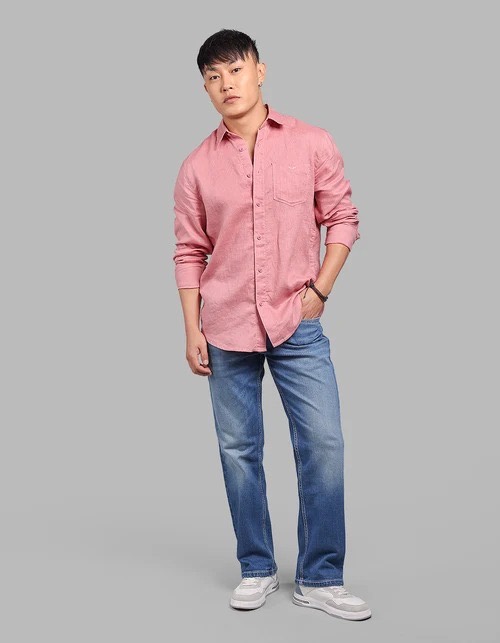
Young man in a dusty-rose long-sleeve shirt with a chest pocket and turned-back cuffs, worn untucked with faded blue jeans and white trainers against a pale grey backdrop
Cover — Dusty rose, sleeves turned backIllustrative
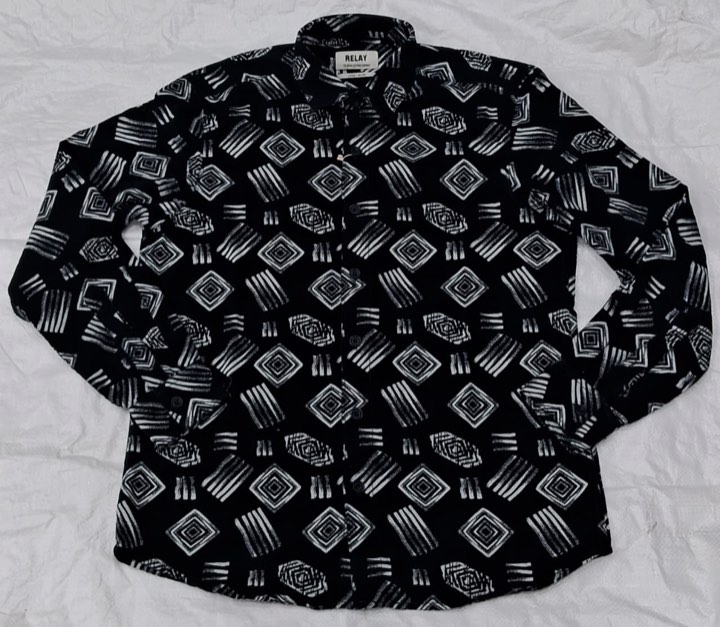
Men's black shirt with a bold white geometric diamond print and a point collar, laid flat on a white sheet
Pl. 00 — Black, white geometric printIllustrative

Cover storyEditor's letter · 2 min read

The quiet authority of a good shirt.

Ten essays on the garment a working man actually lives in — how to choose it, how it should fit, what it pairs with and why it still matters.

Our cover makes the argument gently. A dusty-rose shirt, sleeves turned back to the forearm, worn loose over faded denim and white trainers. It is not office dress, and it does not pretend to be. But look at how much of the picture the shirt is doing: the colour lifts the face, the collar holds its line, the shoulder seam sits where it should. Get the shirt right and everything else becomes easier.

That is the thinking behind this journal. Mumbai asks a lot of a man's wardrobe — humid commutes, air-conditioned boardrooms, client lunches that become dinners — and the formal shirt sits at the centre of all of it. Over the following pages, the Options Mall Style Desk sets out what we have learned about men's formal shirts in Juhu and beyond: the white shirt as foundation, the many lives of blue, collars, fits, colour pairings and how to build a collection that works every day of the week.

Read it in order or dip in. Then, if a page sparks a question, come and find us in Juhu and see the ideas in cloth.
Begin with N°01

N°01The buying guide3 min read

How to Choose the Perfect Formal Shirt

Forget the label and the hanger appeal. A good formal shirt reveals itself in four places — collar, shoulder, sleeve and cloth — and you can check all of them in under five minutes.

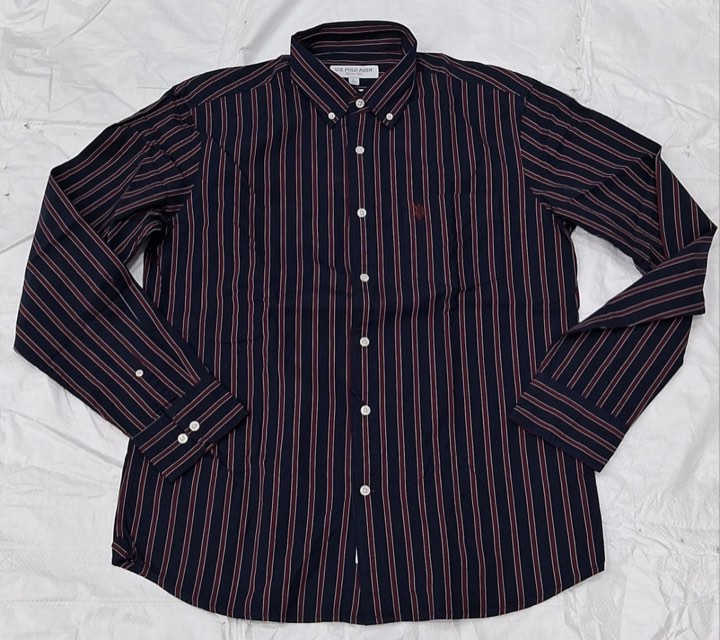
Men's navy formal shirt with burgundy and white vertical stripes and a button-down collar, laid flat on a white sheet
Pl. 01 — Navy ground, burgundy stripe, button-down collarIllustrative

Most men buy a shirt the way they buy a newspaper — quickly, by the headline. A colour catches the eye, the size on the label looks familiar, and the decision is made. Yet the shirt you choose this way is often the one that stays in the wardrobe, worn twice and then quietly forgotten. Choosing well takes a little more attention, applied in the right order.

Start at the collar

The collar frames the face and is the first thing anyone sees across a table. Button it fully: you should be able to slip two fingers between collar and neck, no more. Look at the points — do they sit flat against the chest, or curl outwards? A collar with a clean, firm shape will survive a long day; one that already looks tired on the rail will not improve with wear. Our essay on the importance of shirt collars goes further.

Then the shoulders

The shoulder seam should land on the edge of your shoulder bone — not halfway down the arm, not riding up the neck. This is the one measurement that is hardest to correct afterwards, so treat it as non-negotiable. If the shoulder fits and the body is a touch generous, you have a sound shirt. If the shoulder is wrong, walk on.

Sleeves and cuffs

With your arms relaxed, the cuff should meet the base of the thumb, so that a sliver shows beneath a jacket sleeve. Fasten it: a watch should slide beneath without forcing the cuff open. Check that the sleeve does not twist as you lift your arm — a sign of a well-set sleeve.

Cloth you can feel

Rub the fabric between finger and thumb. A good poplin feels smooth and cool; an oxford has a pleasant, slightly nubbly texture; a twill shows a fine diagonal and drapes with a little weight. None is “best” — they suit different days. Our guide to fabrics and details explains each.

The fitting-room checklist

  1. Two fingers fit inside the buttoned collar.
  2. Shoulder seam sits on the shoulder bone.
  3. No pulling across the buttons when you sit down.
  4. Cuff reaches the base of the thumb, with room for a watch.
  5. The hem stays tucked when you raise both arms.
  6. Stitching runs straight and even along the placket and collar.

Pass all six and you have found a shirt worth owning. The pictured example — a navy ground with burgundy and white stripes and a button-down collar — would ask only one more question: is it for the boardroom or for the weekend? Answer that, and the shirt does the rest.

N°02Essentials2 min read

White Shirts: The Foundation of Men's Formalwear

Every serious wardrobe is built on a white shirt. But “white” is a family, not a single colour — and knowing its members is the beginning of dressing well.

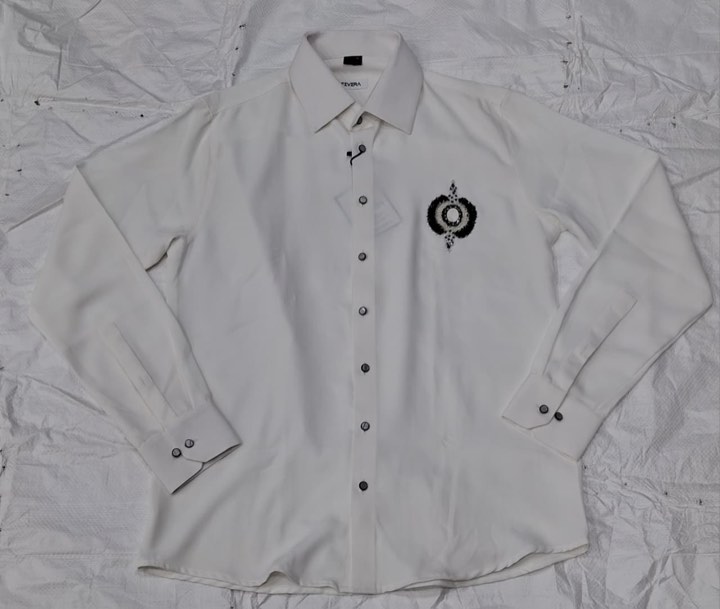
Off-white men's shirt with a point collar, dark contrast buttons and a large black embroidered emblem on the chest, laid flat on a white sheet
Pl. 02 — Off-white, dark contrast buttons, embroidered chest emblemIllustrative
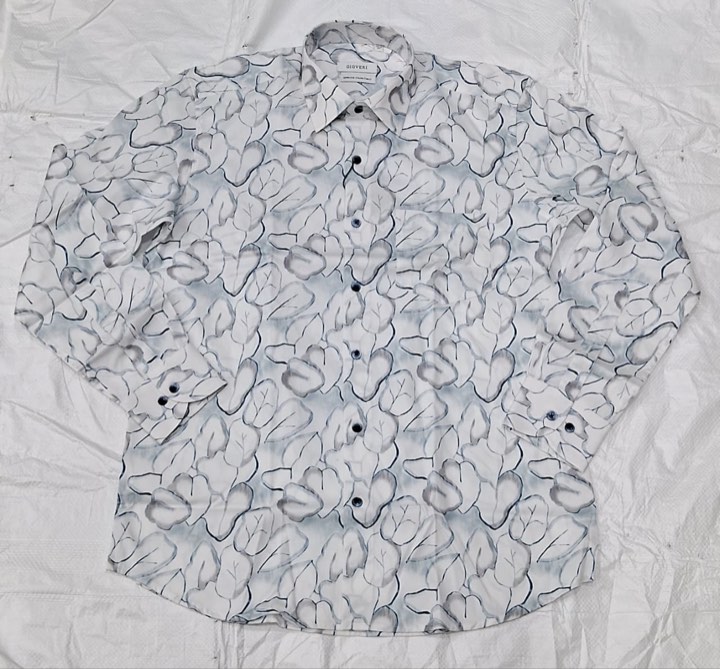
Men's white shirt with a grey and light blue abstract outline print and dark buttons, laid flat on a white sheet
Pl. 02b — White ground, grey and light blue printIllustrative

Why white works

White reflects light onto the face, flatters almost every complexion and accepts any tie, any suit, any trouser. It is the one shirt that is never wrong at an interview, a wedding, a board meeting or a funeral. For men's white formal shirts, that versatility is the whole point: a single good white can carry an entire working week, re-cast each day by what you wear with it.

Not all whites are equal

Bright white is the most formal — crisp, cool and best with charcoal, navy and black. Soft white, sometimes called natural white, is a touch warmer and kinder to deeper skin tones under office lighting. Off-white and ivory, like the shirt in our plate, sit closer to cream; they are relaxed and suit lighter suits, linen-look trousers and evening events more than the morning stand-up.

“A white shirt is a blank page. What matters is what you choose to write on it.”

Detail, used sparingly

The pictured shirt makes a deliberate statement: dark contrast buttons, and a bold embroidered emblem on the chest. It is a dressier, more personal take on white — suited to an evening or a celebration rather than a client presentation. For daily office wear, look for a plain front, white or mother-of-pearl-effect buttons and a collar that holds its shape.

Keeping white white

  • Wash whites together, and never with a new dark shirt.
  • Treat the inside of the collar and cuffs before washing — that is where marks gather first.
  • Avoid over-bleaching; it can yellow cloth over time.
  • Own at least two, so that each gets a day of rest.

Begin with one bright white and one soft white, in the fit that suits you. Everything else in this journal — colour, pattern, collar — is a variation on that foundation. You can see the range of white formal shirts in our collections, or compare them in person in Juhu.

N°03Wardrobe2 min read

The Modern Executive Wardrobe

Executive dressing used to mean a dark suit and a white shirt, every day. Today's leader has more freedom — and therefore more decisions to get right.

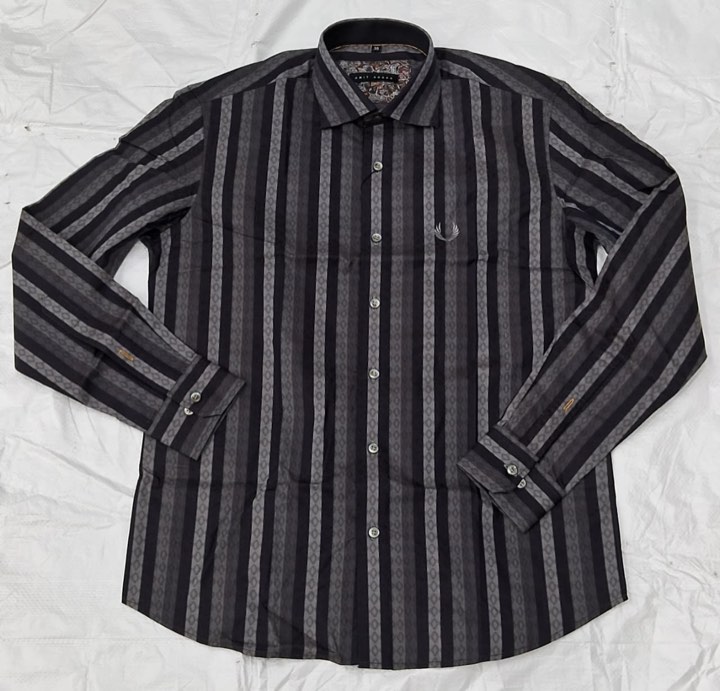
Black men's executive shirt with grey patterned vertical stripes, a spread collar with a patterned inner band and an embroidered chest emblem, laid flat
Pl. 03 — Black with grey patterned stripe, spread collarHover to inspect

Walk through any office in Bandra-Kurla Complex or Lower Parel and the old uniform has loosened. Jackets hang on chairs; ties appear for some meetings and not others. What has not changed is the scrutiny. Senior people are watched more closely than anyone, and their clothes are read as a signal of judgement. The modern executive wardrobe is not about more clothes. It is about fewer, better decisions.

Fewer, better

A strong executive wardrobe is smaller than you might think. Its job is to remove the morning question entirely. Every shirt should work with every pair of trousers, and every one should look right with or without a jacket. Men's executive shirts earn their place by being reliable rather than remarkable.

The working palette

White and light blue do most of the work. Add pale pink or lilac for warmth, a fine stripe for texture, and one or two deeper shirts for evenings. Charcoal, navy and mid-grey trousers sit underneath all of them.

“Authority is rarely loud. It is the man whose collar has not moved since nine o'clock.”

Pattern with authority

A darker, patterned shirt — like the black shirt with grey patterned stripes in our plate, with its spread collar and patterned inner collar band — belongs to the evening side of the wardrobe: a leadership dinner, an awards night, a client event after hours. Worn with charcoal trousers and black shoes, it reads as confident rather than casual. Keep it away from daylight presentations, where it can feel heavy.

The executive core

  • Two bright white shirts with a firm spread collar.
  • Two light blue shirts — one solid, one fine stripe.
  • One soft pink or lilac for warmth under navy.
  • One double-cuff shirt for the occasions that ask for it.
  • One darker shirt for evening engagements.

Beyond the jacket

Because the jacket is now optional, the shirt must hold its line on its own. Pay attention to the collar's stiffness, the fit through the body and the length of the hem — the details that used to hide under a coat now carry the look. Explore our executive formal shirts or read how the collar shapes the whole impression in N°09.

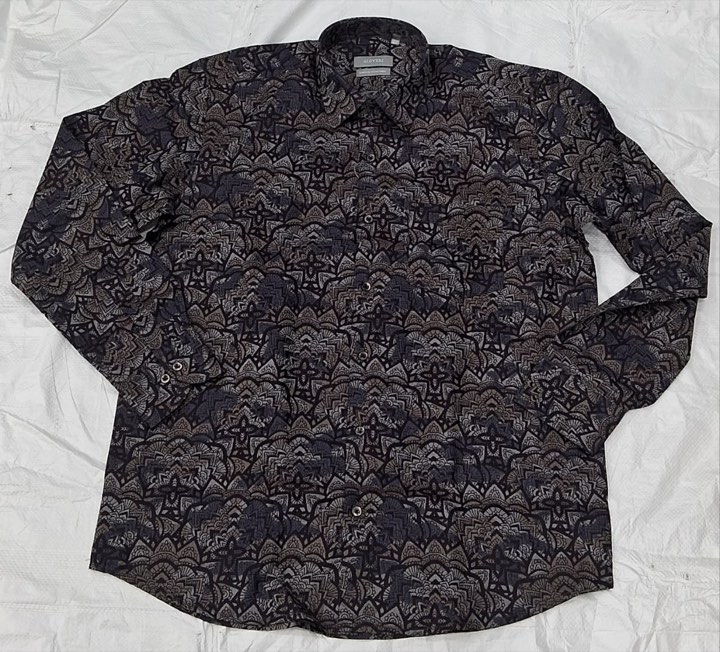
Men's black shirt with a dense beige fan and floral print and a point collar, laid flat on a white sheet
Pl. 03b — Black ground, beige print: an after-hours shirtIllustrative

N°04Styling2 min read

Five Ways to Style a Blue Formal Shirt

If white is the foundation, blue is the workhorse. One good blue shirt, five completely different days.

Blue is the most forgiving colour a man can wear near his face. It is calm, it suggests trust, and it hides the small creases of a long day better than white. Men's blue formal shirts range from the palest sky to the mid-blue, slightly washed tone in our plate — and each shade opens a different set of combinations. Here are five that we return to again and again.

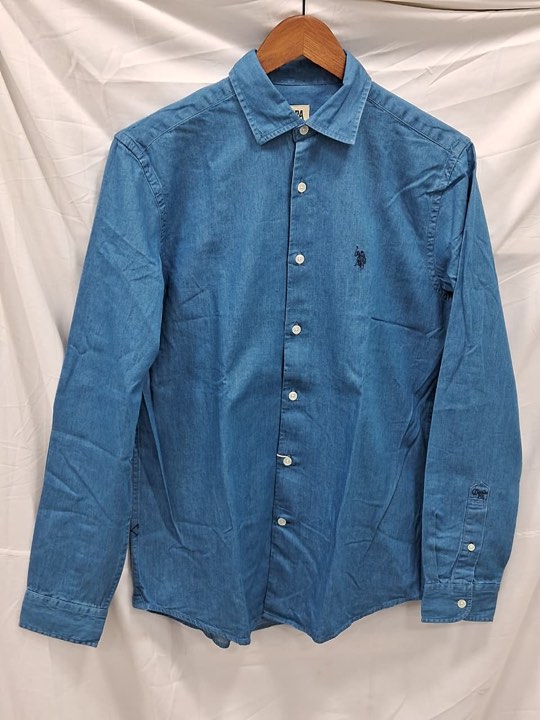
Mid-blue men's shirt with a chambray-like washed tone, point collar and small embroidered logo, hanging on a wooden hanger against a white cloth
Pl. 04 — Washed mid-blue, point collarIllustrative
  1. Tonal, with navy

    Pair a light or mid-blue shirt with a navy suit and a navy knitted tie. Tonal dressing looks considered without effort, and lengthens the frame. It is the safest way to look sharp at a presentation — and in a navy room, the shirt's lighter blue keeps the face bright.

  2. Under charcoal, with burgundy

    Charcoal trousers or a charcoal suit, a blue shirt and a burgundy tie: a combination that has served bankers and barristers for generations. The cool grey quietens the blue; the burgundy adds warmth. Black or dark brown shoes both work.

  3. With stone chinos, no tie

    For a lighter office day or a Friday, swap the suit for stone, sand or light grey chinos and leave the collar open. Tuck the shirt in, add a brown leather belt and loafers. It is relaxed, but nobody will mistake it for casual.

  4. Beneath a soft blazer at dusk

    A deeper, textured blue — like the shirt in our plate — sits beautifully under an unstructured blazer in grey, olive or brown. Open the collar, roll nothing, and go from a late meeting straight to dinner.

  5. Blue on blue, with white trousers

    In Mumbai's warmer months, a blue shirt with off-white or pale grey trousers looks fresh and deliberate. Keep shoes brown and the belt matching. It is the one combination here that truly belongs to the weekend lunch rather than the office.

Whichever you choose, start with the right shade for your colouring: paler blues for fairer skin and softer contrasts, richer blues for deeper complexions. See the blue formal shirts in our collections, or pair this with our guide to colour combinations.

N°05Fit2 min read

Understanding Shirt Fits

Slim, tailored, regular: three words printed on countless labels, and the reason so many good shirts look wrong. Here is what each really means — and how to tell which is yours.

Fit is not a matter of fashion so much as geometry. A shirt is a set of measurements — chest, waist, shoulder, sleeve, armhole — and a “fit” is simply a decision about how much room to leave between those measurements and your body. Slim-fit formal shirts for men leave the least; regular-fit formal shirts leave the most. Neither is better. The right one is the one that follows your shape without fighting it.

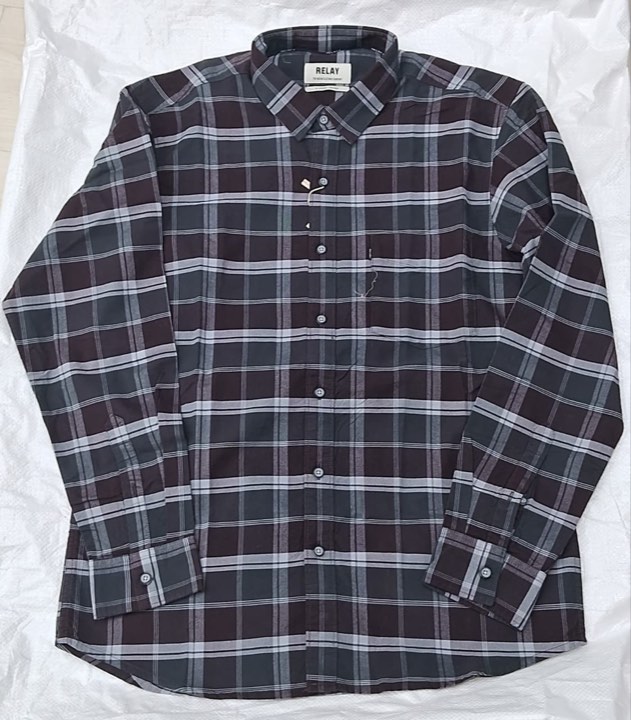
Men's checked shirt in aubergine, slate grey and white with a chest pocket and button cuffs, laid flat on a white sheet
Pl. 05 — Aubergine, slate and white checkIllustrative
Table 05 — The three fits, compared · scroll sideways →
MeasureSlim fitTailored fitRegular fit
ChestClose, with minimal easeModerate roomGenerous, easy
WaistStrongly tapered, often dartedGently taperedStraight through
ArmholeHigh and narrowMidLower and roomier
Best forSlender or athletic buildsMost buildsBroader frames; long, active days
Wear withSlim trousers, fitted jacketsAlmost anythingClassic-cut suits and trousers

A note on pattern and fit

Bold checks, like the aubergine and slate shirt in our plate, are revealing. The lines of the check show exactly where a shirt pulls or billows: horizontals that bow across the chest mean it is too tight; verticals that wander at the waist mean too much cloth. Try a checked shirt when you are unsure of your fit — it will tell you the truth.

Six signs of a good fit

  1. Collar: two fingers, no more.
  2. Shoulder seam on the shoulder bone.
  3. No horizontal pull lines across the buttons.
  4. A fist's worth of cloth at the waist, not a handful.
  5. Cuff at the base of the thumb.
  6. Hem long enough to stay tucked when seated.

When in doubt

Choose the fit that passes the shoulder test, then judge the body. A tailored fit is the most useful starting point for most men; go slimmer only if the cloth lies flat without strain. Read more on slim fit and regular fit in Shirt Styles.

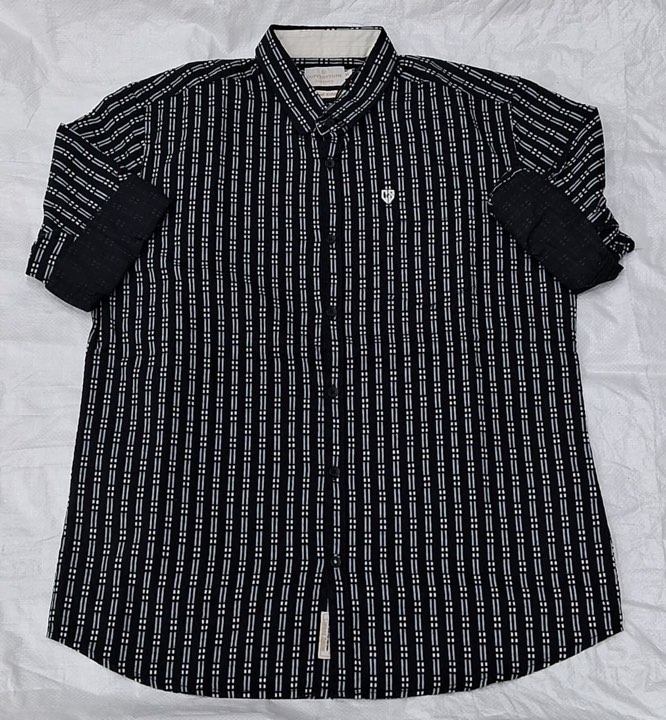
Men's black shirt with a white vertical dash-stripe print, a chest emblem and turned-up sleeves, laid flat on a white sheet
Pl. 05b — Vertical print: lines show the fitIllustrative

N°06Colour2 min read

Formal Shirt Colour Combinations

Colour is where most men either play too safe or stray too far. A few principles — and one reference table — make the whole spectrum usable.

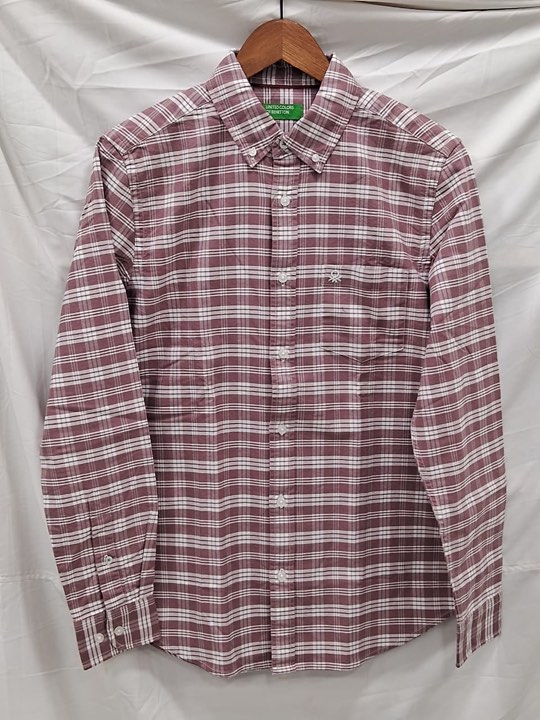
Men's red and white checked shirt with a button-down collar and chest pocket, hanging on a wooden hanger
Pl. 06 — Red and white check, button-downIllustrative
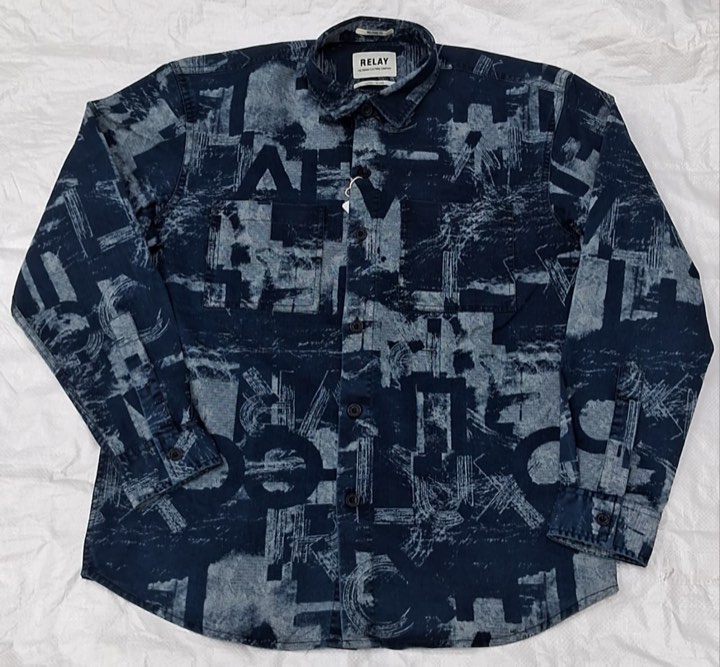
Men's navy shirt with a grey-blue graphic print of letters and shapes, laid flat on a white sheet
Pl. 06b — Navy, grey-blue graphic printIllustrative

The rule of contrast

Every outfit has a contrast level — the difference between its lightest and darkest parts. A white shirt with a navy suit is high contrast: sharp, formal, decisive. A pale blue shirt with a mid-grey suit is low contrast: softer, more approachable. Match the contrast to the occasion, and to your own colouring, and most colour decisions make themselves.

Patterns: change the scale

When you combine patterns, vary their size. A fine check shirt sits happily beneath a broad chalk-stripe suit; a bold check like the red and white shirt in our plate needs solid trousers and, if worn, a plain knitted tie. Two patterns of the same scale fight each other.

Mumbai light

Strong sunlight flattens pale colours and intensifies dark ones. For daytime, mid-tones — sky blue, soft pink, light grey — tend to look richer than either extreme. Save the deepest shirts for air-conditioned evenings.

The supporting cast

Shoes and belt should match each other, not the shirt: black with charcoal and navy for the most formal days, dark brown with almost everything else. A tie should be darker than the shirt it sits on. And when in doubt, let one element lead — a coloured shirt with a quiet tie, or a white shirt with a richer one — never both at once.

Table 06 — Shirt, trouser and accent pairings · scroll sideways →
ShirtTrousersTie or accentReads as
WhiteNavy, charcoal, blackBurgundy, navy, silver-greyFormal, decisive
Light blueNavy, charcoal, stoneBurgundy, navy knitTrustworthy, fresh
Soft pinkNavy, mid-greyNavy, deep greenWarm, confident
LilacCharcoal, navyPlum, silver-greyModern, creative
Blue stripeGrey, navySolid navy or burgundyClassic business
Red checkNavy, stone, greyNone, or plain navy knitRelaxed, Friday
Maroon / deepCharcoal, blackNone — keep it cleanEvening, assured

Swatches are approximate. Colour is personal — bring a jacket or a pair of trousers you already own when you visit us in Juhu, and compare shirts against them in daylight.

N°07Occasion2 min read

How to Dress for Important Business Meetings

The questions our readers ask most before a big meeting — answered plainly, in the order you will face them.

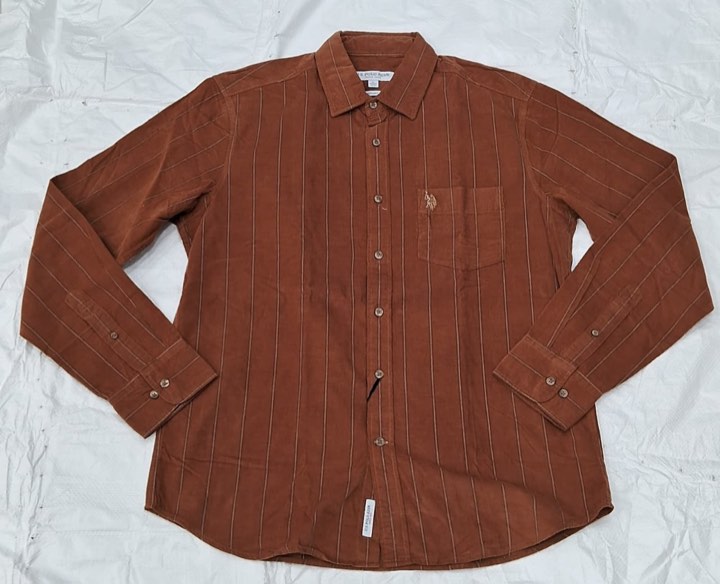
Rust-brown men's shirt with fine pale vertical stripes, a point collar and a chest pocket, laid flat on a white sheet
Pl. 07 — Rust ground, fine pale stripeIllustrative
Q.1 What should I wear to a first meeting with a new client?

Dress one notch above what you expect them to wear. If they are in shirts and trousers, wear a jacket; if they are in suits, wear your best one. A white or light blue shirt is the safest choice — it says preparation, not personality. You can show personality at the second meeting.

Q.2 Jacket or no jacket?

Bring it. You can always take a jacket off; you cannot put on one you left at home. In heavily air-conditioned meeting rooms, it is also simply practical. If you remove it, your shirt must stand alone — which is why the fit of the collar and body matters so much.

Q.3 Is a patterned shirt acceptable?

Yes, if the pattern is quiet. Fine stripes, small checks and subtle textures read well across a table and on camera. Save bold checks and strong colours for internal meetings and Fridays.

Q.4 What about video calls?

Cameras dislike very fine stripes, which can shimmer, and pure white, which can glare. Choose a solid mid-blue, soft pink or light grey, and make sure the collar sits evenly — on screen, it is almost all anyone sees.

Q.5 How do I stay composed in Mumbai's heat?

Choose breathable cloths, carry the jacket rather than wear it on the commute, and keep a spare shirt at the office for the days that matter most. Arrive ten minutes early to cool down before you walk in.

Q.6 Where does a shirt like the one pictured fit in?

The rust shirt in our plate, with its fine pale stripe and chest pocket, is a warm, textured choice for the follow-up meeting or the working lunch once a relationship is established — with navy or stone trousers and brown shoes. For the first, decisive meeting, return to white or blue.

The night before: a checklist

  • Shirt pressed and hung, collar stays in place.
  • Trousers checked for creases and loose threads.
  • Shoes polished; belt matched to shoes.
  • Tie chosen — and an alternative packed.
  • Spare shirt at the office if the day runs long.
  • Pocket square, if worn, simple and white.

N°08History2 min read

The Evolution of Men's Office Fashion

From hidden undergarment to the garment that now carries the whole look: a brief, broad-brush history of the shirt at work.

Office dress has never stood still. Each generation has loosened something its parents held tight — and yet the shirt has survived every change, becoming more visible with each one. The dates below are approximate; fashion moves at different speeds in different cities, and Mumbai has always set some of its own rules.

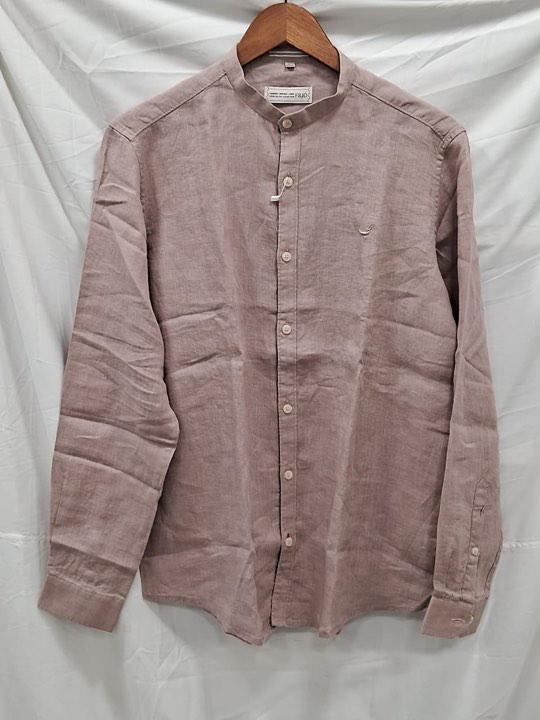
Dusty mauve men's band-collar shirt with a softly crumpled, linen-like texture, hanging on a wooden hanger
Pl. 08 — Mauve band collar, textured clothIllustrative
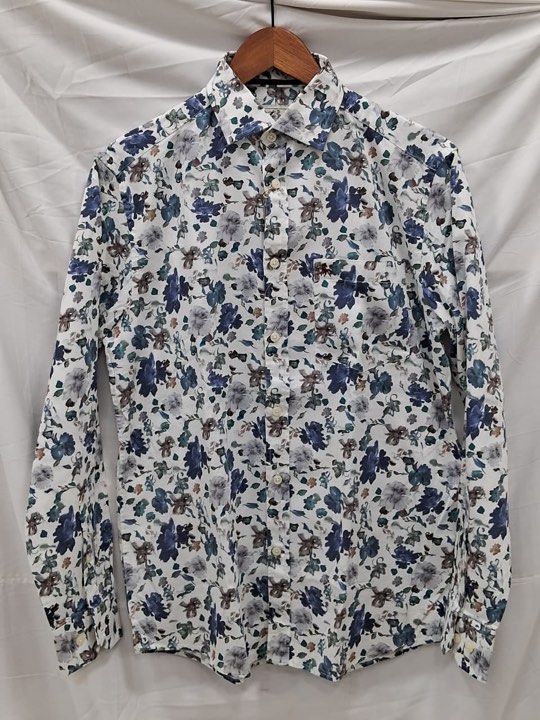
Men's white shirt with a navy and blue floral print and a point collar, hanging on a wooden hanger
Pl. 08b — White, navy and blue floral printIllustrative
  1. 19th century

    The shirt as underwear

    For most of the nineteenth century, a gentleman's shirt was considered an undergarment. Only the collar and cuffs were meant to be seen — often detachable, heavily starched and changed more often than the shirt itself.

  2. Early 20th century

    The collar is attached

    Softer, attached collars slowly won acceptance. White remained the colour of the clerk and the professional — the origin of the phrase “white-collar work”.

  3. Mid-century

    The uniform years

    The suit, the tie and the white or pale blue shirt became the office standard across much of the world. The button-down collar, borrowed from sport, crept into more relaxed workplaces.

  4. 1970s–80s

    Safari suits and power dressing

    In many Indian offices, the safari suit and the bush shirt offered a practical answer to the climate. Elsewhere, the decade of power dressing brought bold stripes, contrast collars and the double cuff back to the boardroom.

  5. 1990s–2000s

    Business casual

    Technology companies and “casual Fridays” loosened the rules. Ties came off, chinos arrived, and the shirt — suddenly without a jacket — had to look good on its own.

  6. Today

    The shirt stands alone

    Hybrid working, warmer cities and a broader idea of “formal” have made the shirt the centre of office dress. Band collars, echoing the bandhgala, sit alongside spread collars; textured cloths like the mauve shirt in our plate share wardrobes with crisp poplin. The rules are fewer — which makes judgement matter more than ever.

What runs through all of it is a steady migration of attention: from the jacket to the shirt, and from the rule book to the wearer. The modern office no longer tells a man exactly what to wear. It simply notices whether he has thought about it — and the formal shirt is still the clearest place to show that he has.

N°09Detail2 min read

The Importance of Shirt Collars

The collar is the smallest part of the shirt and the one that does the most work. It frames the face, holds the tie and decides — more than colour or cloth — how formal the shirt will be.

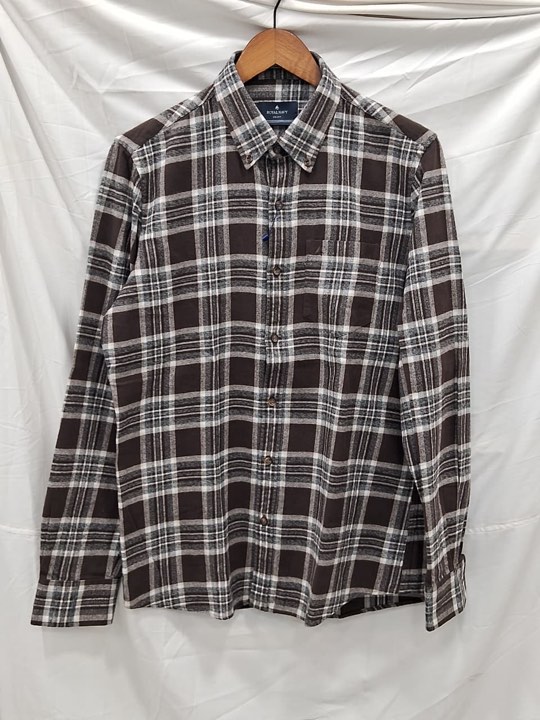
Men's brown, white and grey checked shirt with a button-down collar, chest pocket and brown buttons, on a wooden hanger
Pl. 09 — Brown check, button-down collarIllustrative

Stand across a room from someone and you will notice their collar before you can make out the pattern of their shirt. It sits closest to the face and moves with every turn of the head. A collar that is too small makes the head look large; one that is too wide and soft makes a man look tired by lunchtime. Choose the right shape for your face, and the whole shirt looks more expensive.

Matching collar to face

The principle is balance. A rounder or broader face is lengthened by a point collar, whose narrow angle draws the eye downward. A longer, narrower face is widened by a spread collar. Most faces suit something in between — which is why the semi-spread is the most useful collar a man can own.

Matching collar to occasion

The wider the spread, the more formal the shirt, and the larger the tie knot it expects. The button-down, like the brown check in our plate, sits at the other end: born on the sports field, it is relaxed by design and best without a tie, or with a knitted one.

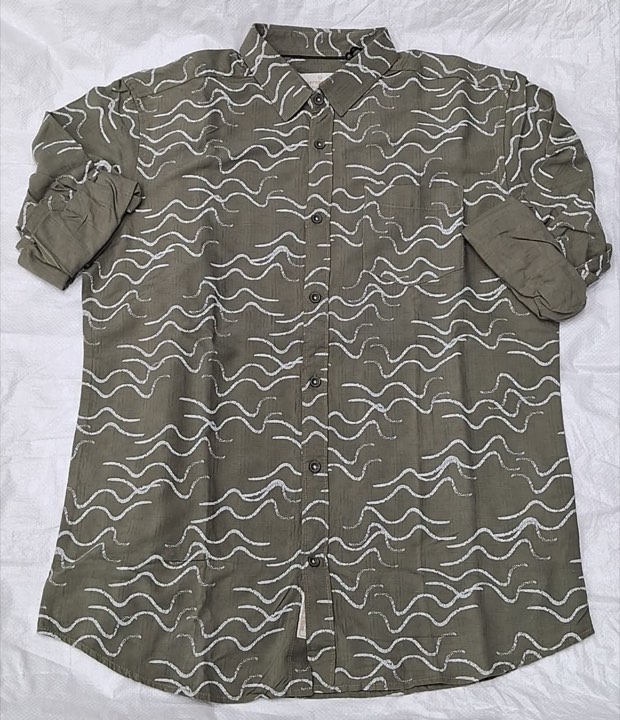
Men's olive grey shirt with a white wavy-line print and turned-up sleeves, laid flat on a white sheet
Pl. 09b — Olive grey, white wave printIllustrative

Whatever the shape, look at how the collar is built — the firmness of the interlining, the evenness of the stitching at the edge. Our notes on collar construction explain what to feel for.

i. Point collar
Narrow angle between the points. Lengthens the face; the classic business collar. Point collar →
ii. Spread collar
Points angled outward; suits a fuller tie knot and a broader jaw. Spread collar →
iii. Cutaway
An extreme spread, almost horizontal. Fashion-forward and very formal with a tie.
iv. Button-down
Points fastened to the shirt. Soft roll, relaxed character; the Friday collar. Button-down →
v. Band collar
A collar stand without points, related to the bandhgala. Tieless, clean and contemporary.

N°10Wardrobe2 min read

Building a Versatile Formal Shirt Collection

Ten shirts, chosen in the right order, will dress a working man for almost any day of the year. Here is the order we would choose them in.

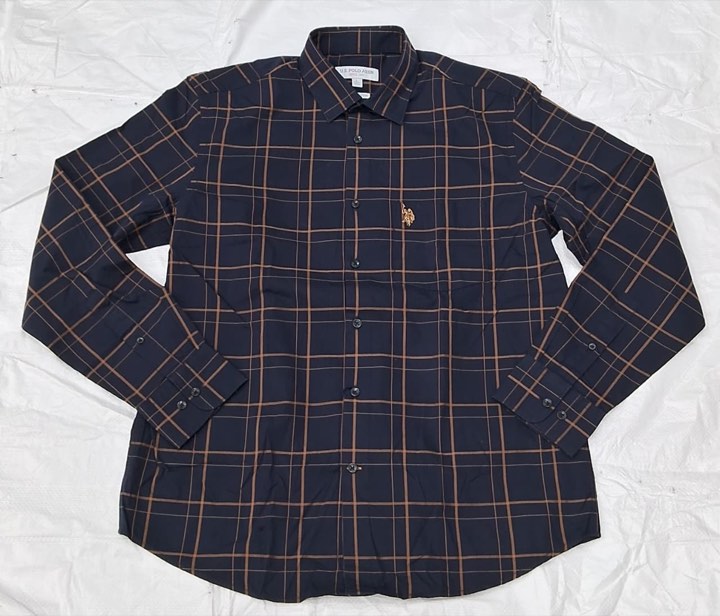
Navy men's shirt with a tan windowpane check, point collar and small embroidered chest logo, laid flat on a white sheet
Pl. 10 — Navy with tan windowpaneHover to inspect

Before you buy the next one

Lay out what you already own. Does the new shirt work with at least three pairs of trousers and two jackets? Does it fill a gap — a colour, a collar, an occasion — or repeat something you have? If it passes both questions, it belongs in the collection. If not, it is a lovely shirt for someone else.

A versatile collection is not a large one. It is a set of shirts that work with each other's trousers, jackets and ties, so that any morning can be dressed in a minute. The secret is sequence: buy the foundations first, then the variations, and only then the statements. Each new shirt should multiply the outfits you already own rather than demanding new ones.

Think in rotations

Five shirts cover a working week; ten allow each to rest between wears, which is how good shirts last for years rather than months. Keep at least two of anything you wear most often.

Where the statement fits

The navy shirt with a tan windowpane check in our plate is the kind of piece that comes late in the sequence — a confident pattern on a dark ground for autumn evenings and relaxed Fridays, with stone, grey or charcoal trousers.

  1. 01Bright white, semi-spreadThe daily anchor.
  2. 02Second white, point collarFor the face-framing days.
  3. 03Light blue, solidThe workhorse.
  4. 04Light blue, fine stripeTexture without noise.
  5. 05White with blue stripeBridges both.
  6. 06Soft pink or lilacWarmth under navy.
  7. 07Small checkThe Friday shirt.
  8. 08Button-down oxfordTieless and relaxed.
  9. 09Double-cuff whiteFor the occasion.
  10. 10One deep statementEvenings, after hours.

Build it at your own pace — the order matters more than the speed. Browse the full collections for each category, then visit us in Juhu to try the foundations on together.

§ Postscript

Read it here. Try it on in Juhu.

A journal can explain a collar; only a mirror can tell you which one is yours. Bring a question from these pages — or a jacket you want to match — and compare men's formal shirts in person on V.M. Road.

Options Mall
Vile Parle Shopping Centre,
Above Sahakari Bhandar, V.M. Road,
Juhu, Vile Parle West,
Mumbai - 400049.

Mob. +91 8369381345 Mail optionsclothingmumbai@gmail.com

Next Browse the collections