Men's Formal Shirts Juhu — the atelier notesShirtFabrics& Details
Walk into any good cutting room after hours and the language changes. Nobody talks about “nice shirts”. They talk about weave and hand, yarn and ply, how a collar rolls and how many stitches sit in an inch of seam. These are those notes — written for men choosing formal shirts in Mumbai, and for anyone who wants to understand what they are touching when they pick a shirt off the rail.
Weaves catalogued
05
Construction points
05
Bench
Juhu, Vile Parle West
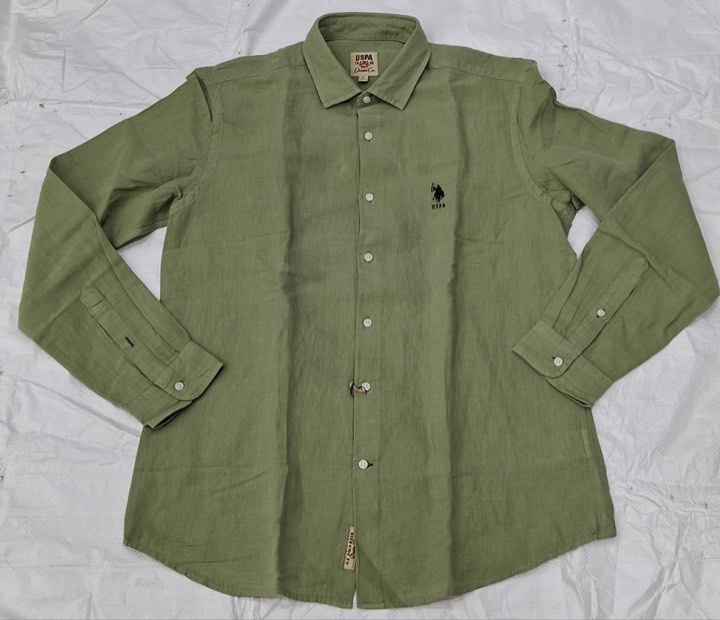
Pl. 01 — Olive, open surface. Illustrative of cotton's range.Hover to inspect the weave
Cotton shirts,before anything else.
Almost every serious formal shirt begins as cotton. It takes dye cleanly, it presses to a sharp edge, it softens with washing rather than wearing out, and — crucially in a city like Mumbai — it lets the skin breathe. But “cotton” on its own tells you very little. The same fibre can become a whisper-light voile or a dense, almost canvas-like twill. What changes is the length of the fibre, how finely it is spun, how many yarns are twisted together, and how those yarns are woven.
Long-staple cottons — the longer individual fibres sold under names like Egyptian or Pima — can be spun into finer, smoother, stronger yarns with fewer loose ends poking through the surface. That is why a good shirting often looks quietly luminous rather than fuzzy, and why it tends to pill less over a year of office wear.
When you handle cotton shirts in store, ignore the label for a moment and use your fingers: rub the cloth between thumb and forefinger, hold it to the light, crush a corner in your fist and watch how it recovers. The weave does the rest of the talking — which is what the swatch book below is for.
§ 02 — The swatch book
Four weaves,read by hand.
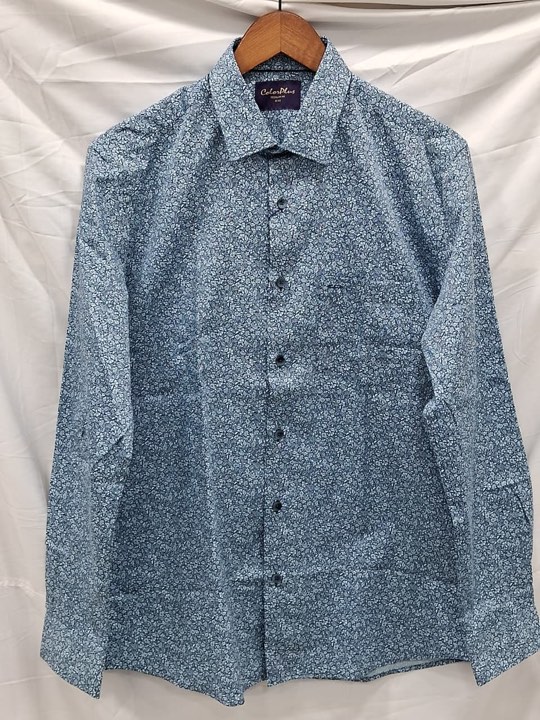
Pl. 13 — Ditsy floral, blue and teal. Illustrative.Hover to inspect
Each ledger entry records how a weave generally looks and behaves — its weight in the hand, its texture, its sheen, how it breathes and where it belongs in a working wardrobe. The plates are illustrative: they show colour, pattern and surface, not the composition of a particular shirt. Move a cursor across any plate to bring the loupe to the weave.
N°02
Poplin — also broadcloth
Weave
Plain, one over one under
Weight feel
Lighter
Texture
Smooth, flat, crisp
Sheen
Low to soft
Breathability
Good
Best for
Suits, ties, the daily office
Poplin is the archetypal business shirting: a tight plain weave in which fine warp yarns are packed closely over a slightly heavier weft, leaving a faint horizontal rib you can just see if you look along the cloth. The result is smooth, cool to the touch and pleasingly crisp after an iron. It is the natural partner for white formal shirts and for blue formal shirts worn under a jacket.
In the hand: almost no surface texture; a fine poplin feels slightly slippery. Hold it to a window — a good one is dense enough that you cannot read through it, yet still light. Its one weakness is honesty: poplin shows creases, so it rewards a proper press.
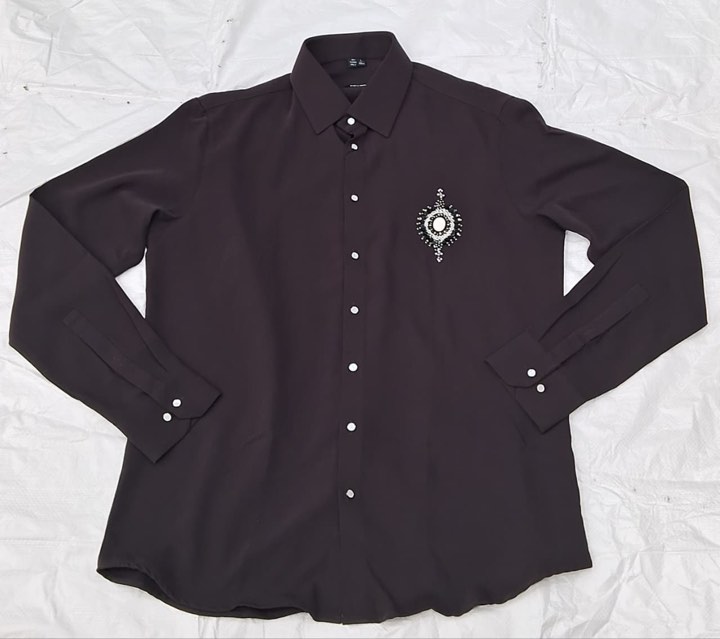
Pl. 02 — Black, smooth and even. Illustrative of a poplin-like finish.Hover to inspect the weave
N°03
Oxford — the basket weave
Weave
Basket, paired yarns
Weight feel
Medium to heavier
Texture
Pebbled, softly nubbed
Sheen
Matte
Breathability
Good, airy
Best for
Button-downs, smart-casual, Fridays
Oxford is woven with two or more yarns travelling together in one direction, creating a small, chequerboard-like basket texture. Often a coloured yarn is crossed with a white one, giving the cloth its slightly heathered, two-tone look. It is sturdier and more relaxed than poplin, and it famously improves with age, softening wash after wash.
In the hand: you can feel the grain under a fingertip. A “royal oxford” uses finer yarns for a dressier, more pronounced basket; at the other end, a heavier oxford sits best on a button-down collar with chinos rather than under a sharp suit.
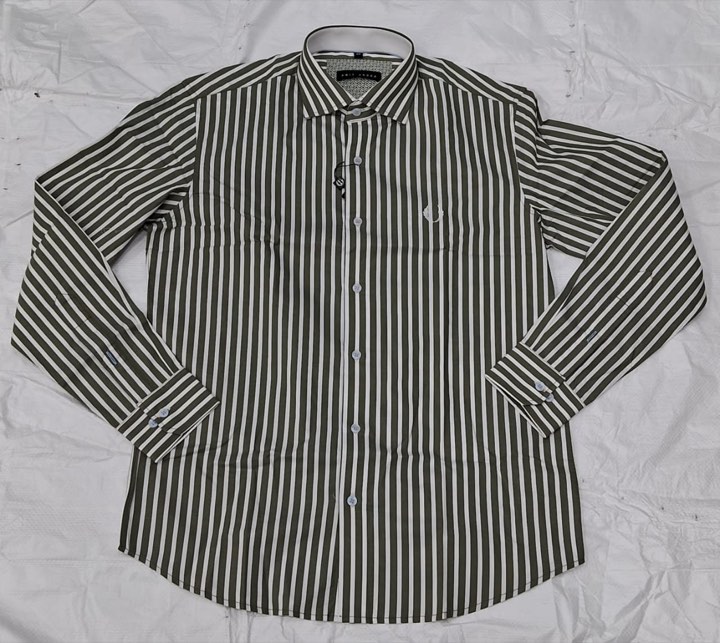
Pl. 03 — Olive and white stripe. Illustrative of a structured shirting.Hover to inspect the weave
N°04
Twill — the diagonal
Weave
Stepped, diagonal rib
Weight feel
Medium to heavy
Texture
Soft, fluid, ribbed
Sheen
Soft lustre on fine twills
Breathability
Moderate
Best for
Travel, long days, cooler rooms
In a twill, each weft yarn passes over one or more warp yarns and then under, with the starting point stepping along by one on every row. That offset draws a fine diagonal line across the face of the cloth. Twills drape beautifully, resist creasing better than plain weaves and often carry a gentle sheen — which is why a fine twill is a favourite for executive formal shirts. Herringbone is simply a twill whose diagonal reverses at regular intervals.
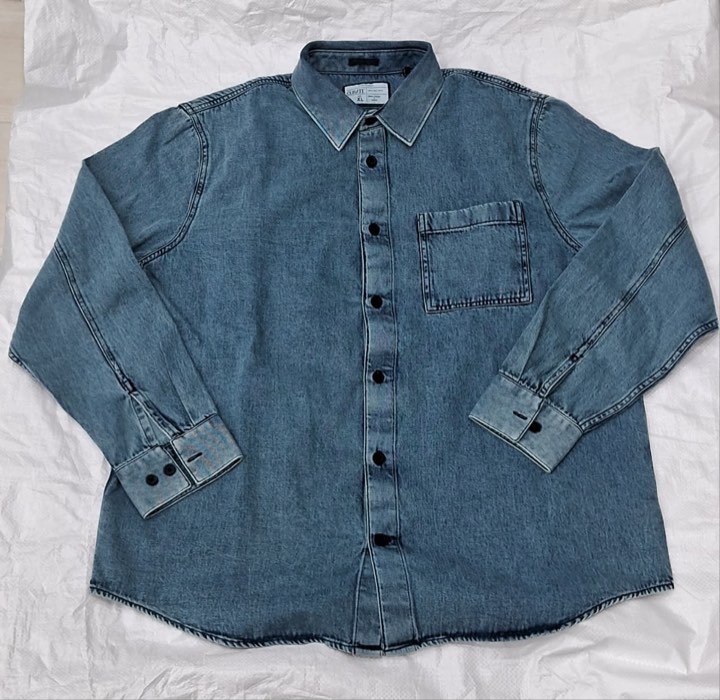
Denim is a twill, too. Traditionally an indigo-dyed warp is woven with an undyed weft, so the diagonal shows blue on the face and paler on the reverse — turn back a denim cuff and you will see it. In fine shirting weights the same structure becomes something far more refined, but the principle is identical.
Pl. 04 — Washed blue, chest pocket. Illustrative of a denim-style twill surface.Hover to inspect the weave
N°05
Pinpoint — the middle way
Weave
Fine basket, two-by-one
Weight feel
Medium
Texture
Fine, faintly dotted
Sheen
Low
Breathability
Moderate to good
Best for
Office days that run into evenings
Pinpoint — often called pinpoint oxford — uses the oxford basket structure but with much finer yarns, woven more tightly. The texture shrinks to a field of tiny points you notice only up close. It sits neatly between poplin and oxford: a little heavier and more opaque than poplin, smoother and dressier than a classic oxford, and noticeably resistant to creasing.
In the hand: look for an even, almost granular surface with no slubs. Pinpoint is a reliable choice for men's office shirts that must look composed from a morning meeting to a dinner, and it suits both striped and solid designs.
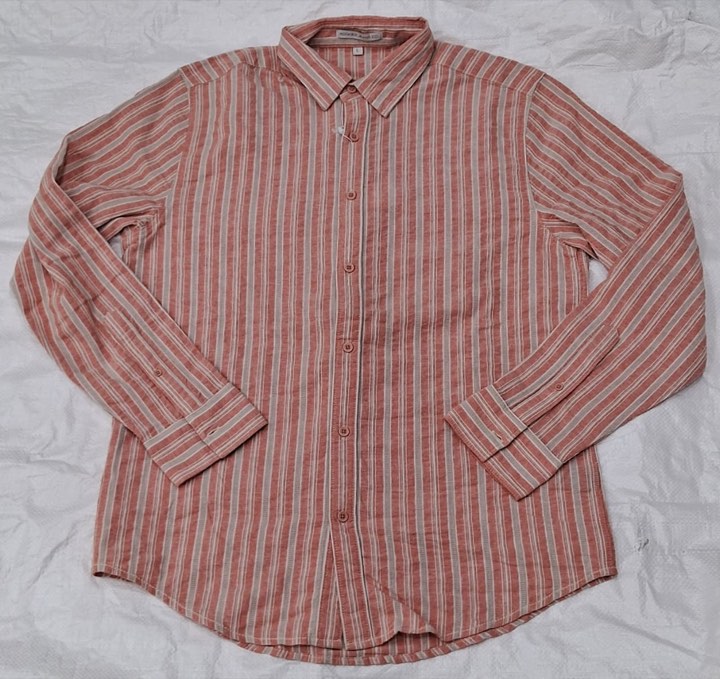
Pl. 05 — Coral and white stripe. Illustrative of a fine, grained surface.Hover to inspect the weave
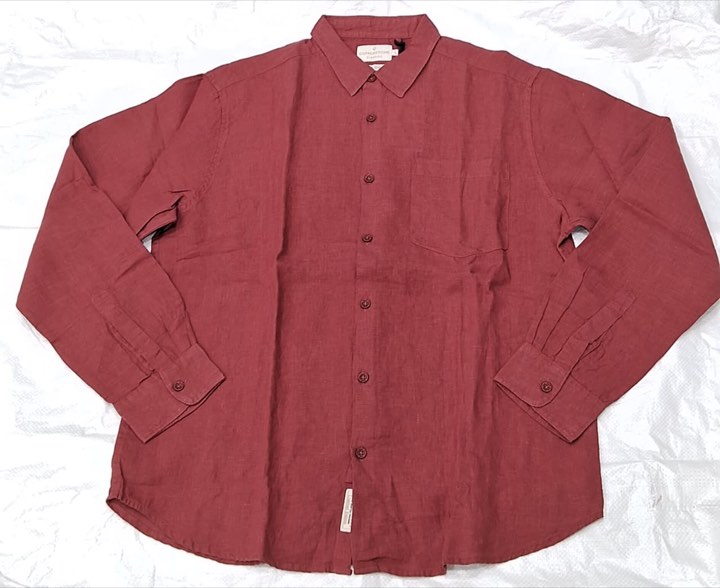
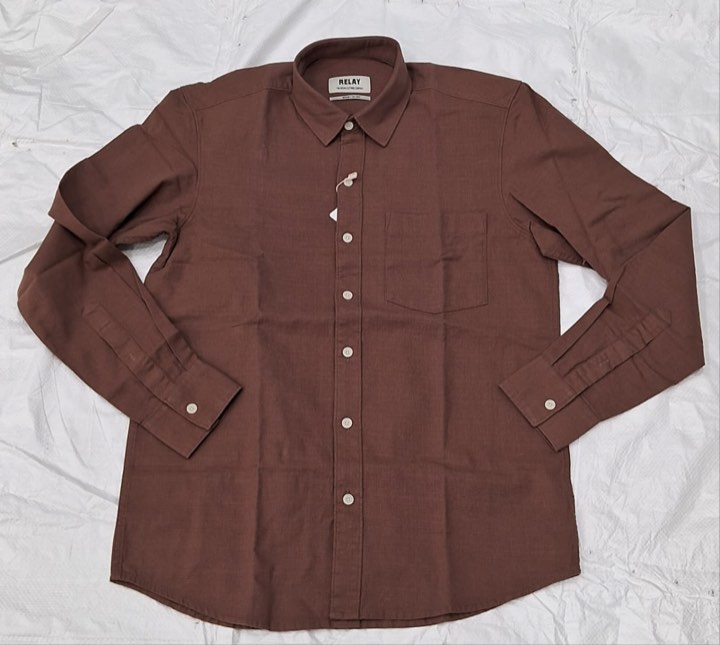
Pl. 06 — Brick red, visible slub. Illustrative of a textured, heavier-handed cloth.Hover to inspect the weave
§ 03 — Weight & texture
Fabric weightand texture.
Cloth weight is usually expressed in grams per square metre — GSM — and it shapes everything: how a shirt drapes, how opaque it is, how warm it wears and how formal it reads. Lighter shirtings fall close to the body and feel cool; heavier ones hold their own shape, hide the undershirt and lean towards the relaxed end of formal.
Texture works alongside weight. Smooth, flat surfaces read as dressier because they reflect light evenly; slubbed or pebbled surfaces scatter it, softening the look. As a rule of thumb, the sharper the suit, the smoother the shirt; the more casual the trouser, the more texture you can carry.
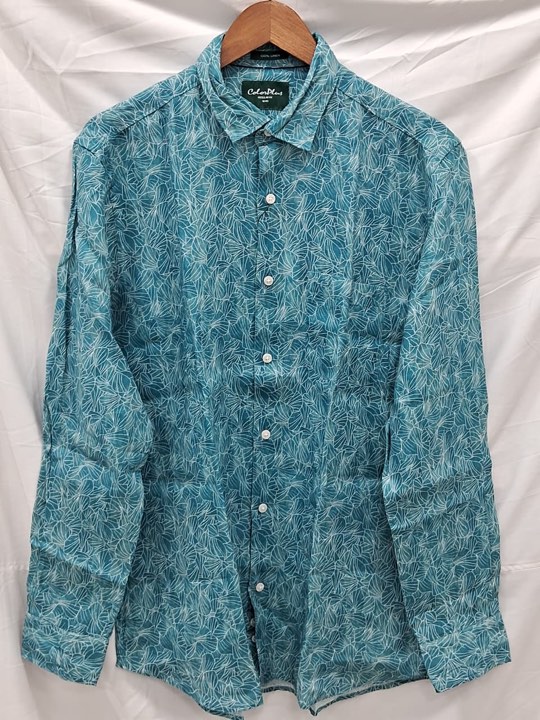
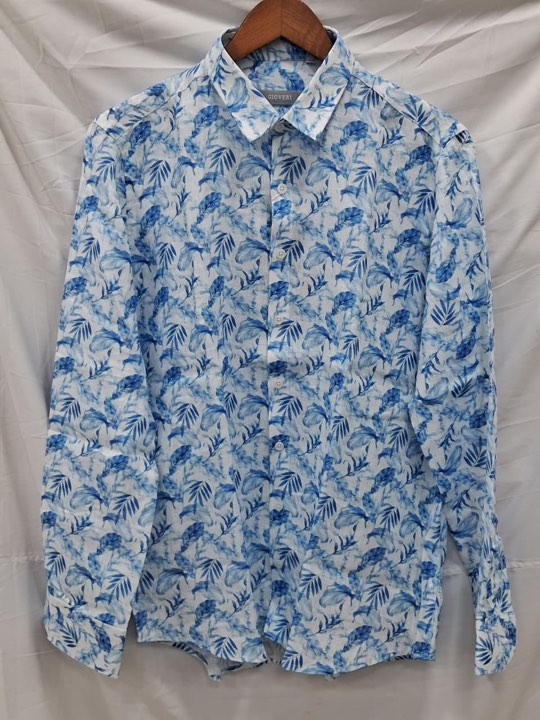
Pl. 14 — Teal leaf print, softly crumpled. Illustrative.Hover to inspect
Voile
Poplin
Pinpoint
Twill
Oxford
Denim
LighterA general sense of hand — actual cloths overlapHeavier
The window test
Hold a fold to the light: dense, even cloth glows; thin cloth shows the room.
The crush test
Squeeze a corner for five seconds. Fast recovery means fewer creases by lunchtime.
The drape test
Lay the sleeve over your hand. It should fall in soft folds, not stand in stiff planes.
§ 04 — Climate
Humidity
Breathability,Mumbai-proofed.
In a city where the air is heavy for much of the year and the monsoon soaks everything for months, the most elegant shirt is the one that still looks composed at six in the evening.
Breathability comes down to two things: the fibre's ability to absorb and release moisture, and how open the weave is. Natural fibres — cotton and linen above all — draw perspiration away from the skin and let it evaporate. A looser, more open weave adds airflow. Linen, and cotton-linen blends, are the classic answer to humid heat: crisp, cool, quick to dry, and honest about their creases, which is part of their charm.
Shirts with a high proportion of synthetic fibre can feel slick and easy-care in an air-conditioned office, but tend to trap warmth and moisture on a crowded commute. If you spend your day moving between a cold boardroom and a muggy street, look for natural fibres in a lighter weight — and check the label to know exactly what you are buying.
i.Choose lighter weights and more open weaves for the hottest, wettest months.
ii.Pale colours reflect heat; fine stripes disguise the inevitable creases.
iii.Allow a little ease through the body — a shirt that clings cannot ventilate. See regular fit.
iv.A fine cotton vest under the shirt absorbs moisture and keeps the shirt cleaner, longer.
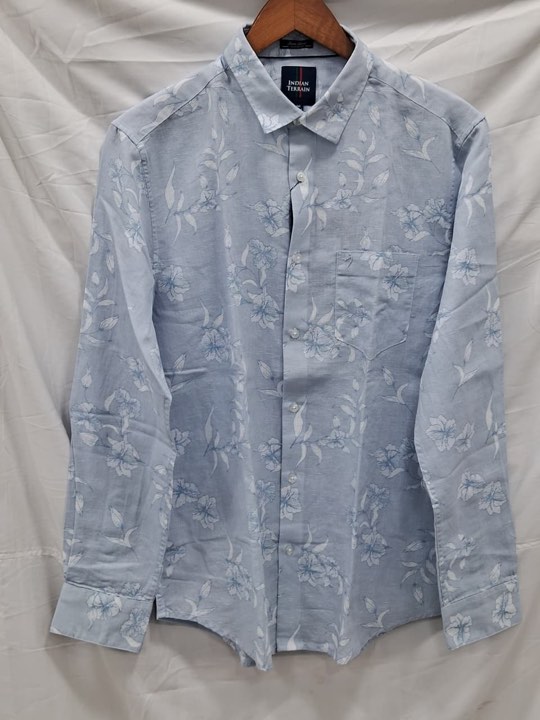
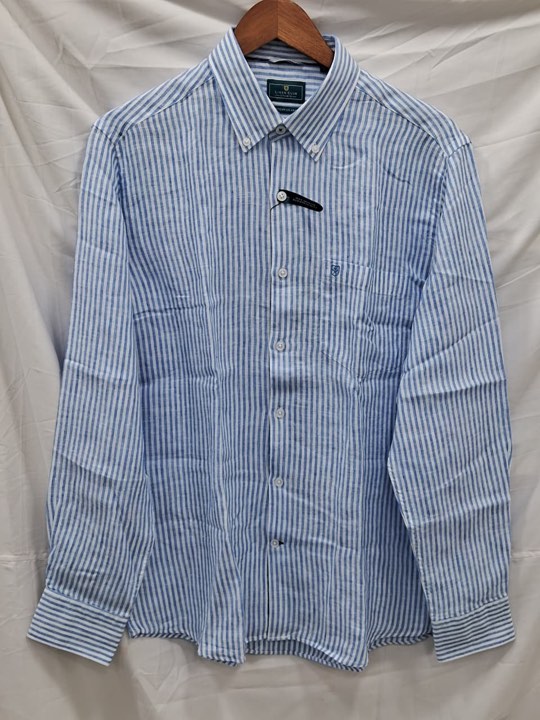
Pl. 15 — Pale blue, white floral. Illustrative of a light, pale shirting.Hover to inspectPl. 07 — Blue stripe on the hanger. Illustrative of an open, airy hand.Hover to inspect the weave
§ 05 — The workbench
Constructiondetails.
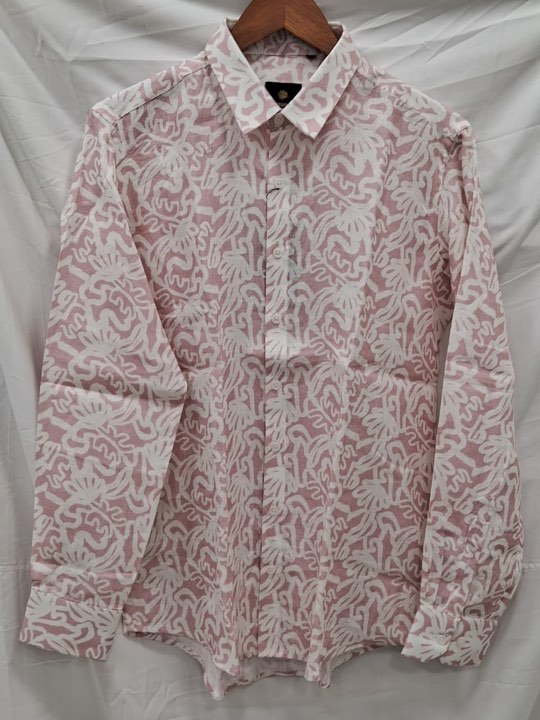
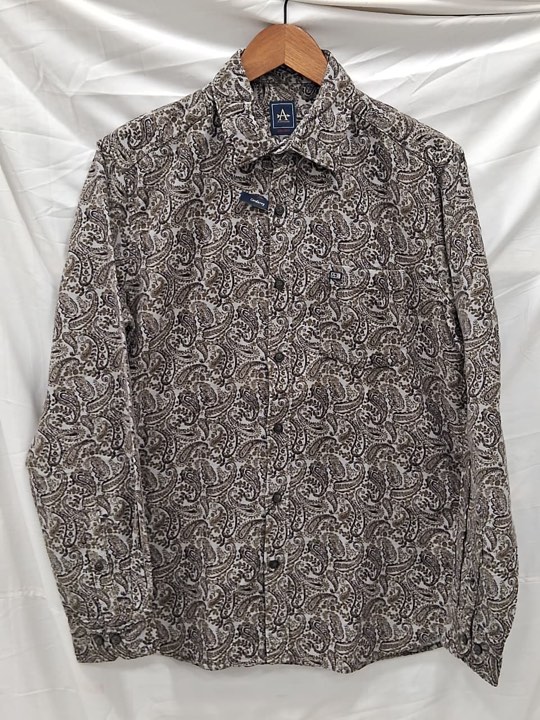
Pl. 17 — White and dusty pink print.IllustrativePl. 18 — Brown and cream paisley.Illustrative
Cloth is half of a shirt. The other half is how it has been cut, sewn and finished — the five places below are where quality, or the lack of it, shows first. None of them needs a magnifying glass; all of them reward a slow, deliberate look.
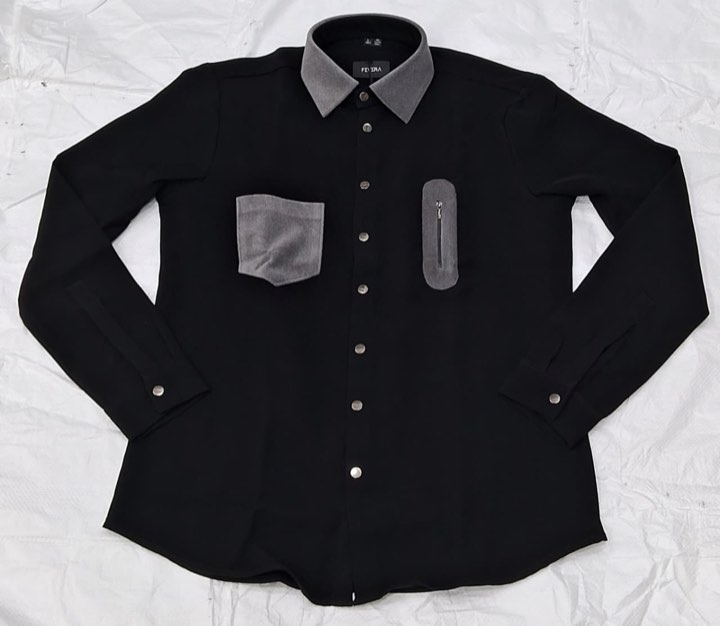
Pl. 08 — Grey contrast collar on black.Illustrative
01
Collar construction
The collar frames the face, so it carries more engineering than any other part of the shirt. Between its outer layers sits an interlining that gives it body. In a fused collar the interlining is bonded with heat to the cloth — crisp, consistent and easy to care for. In a sewn or non-fused collar it is stitched in loose, giving a softer, more natural roll that many purists prefer. Both can be excellent; what matters is execution.
Feel
Roll the collar point between thumb and finger. It should be firm but supple, with no stiff, papery edge.
Look
Points of equal length, a band that sits flat, stitching that runs a consistent distance from the edge.
Avoid
Bubbling or puckering on the collar surface — a sign of poor fusing that only worsens with washing.
Which shape suits your face and tie? Read about the spread collar and its relatives.
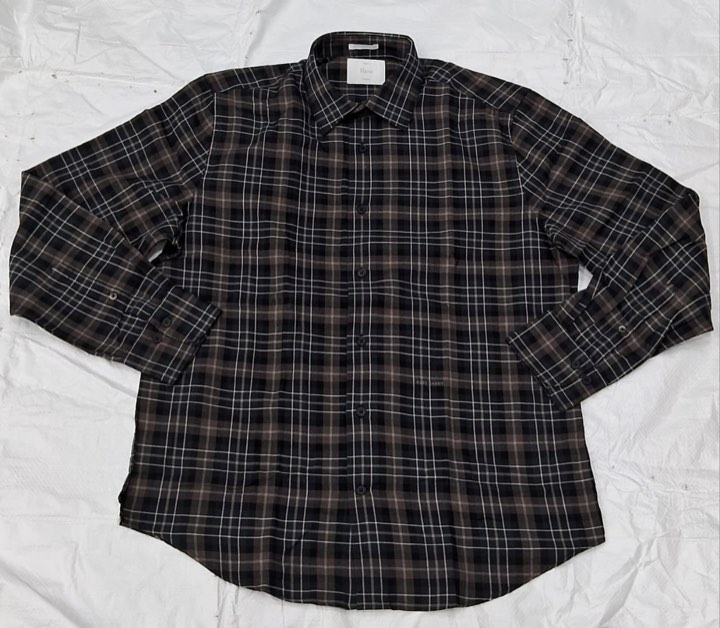
Pl. 09 — Fine check, barrel cuffs.Illustrative
02
Cuff construction
Cuffs take more wear than anywhere except the collar: they rub on desks, keyboards and watch straps all day. Like the collar, a good cuff is interlined so it keeps a clean, rounded edge rather than collapsing.
Barrel
Buttoned, everyday; two buttons side by side let you adjust for a watch.
French
Folded back and closed with cufflinks — the formal choice.
Check
A small button on the sleeve placket above the cuff, so the opening does not gape.
Buttons are small, but the eye goes to them. Mother-of-pearl, cut from shell, generally feels cool against the lip or cheek, is often thicker and carries a natural, shifting iridescence — no two are quite identical. Resin and other plastic buttons are perfectly uniform, lighter and more affordable; well-made ones are entirely respectable.
Attachment
Tight, even stitching with a little thread shank behind, so the button sits flat over the placket.
Buttonholes
Dense, clean stitching with no fraying threads at the slit.
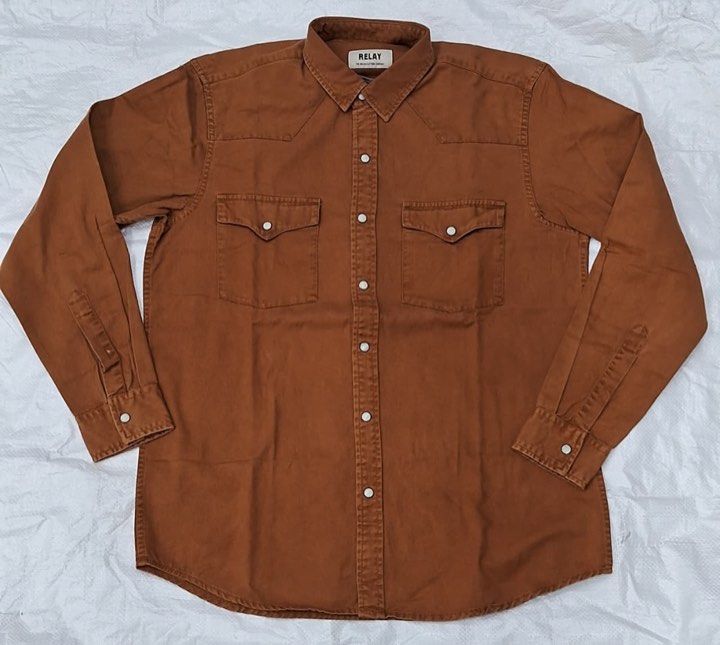
Pl. 11 — Rust, yokes and topstitching.Illustrative
04
Stitching
Count the stitches. Stitches per inch is one of the most reliable quality cues on any shirt: a higher density gives a finer, flatter, stronger seam that survives laundering without puckering. Fine shirtmakers are often cited as working at well upwards of fifteen to the inch, while hurried production tends to use visibly longer stitches. Lay a ruler — or a fingernail's width — along a side seam and compare two shirts; the difference is obvious.
Seams
Flat-felled side seams enclose the raw edges; they lie flat and wear well.
Lines
Topstitching should run straight and parallel, at an even distance from the edge.
Pattern
On stripes and checks, look for alignment at the pocket, placket and yoke.
Pl. 12 — Black, white piping and embroidery.IllustrativePl. 19 — Blue leaf print. On prints, check the pattern runs on across the placket.Illustrative
05
Finishing details
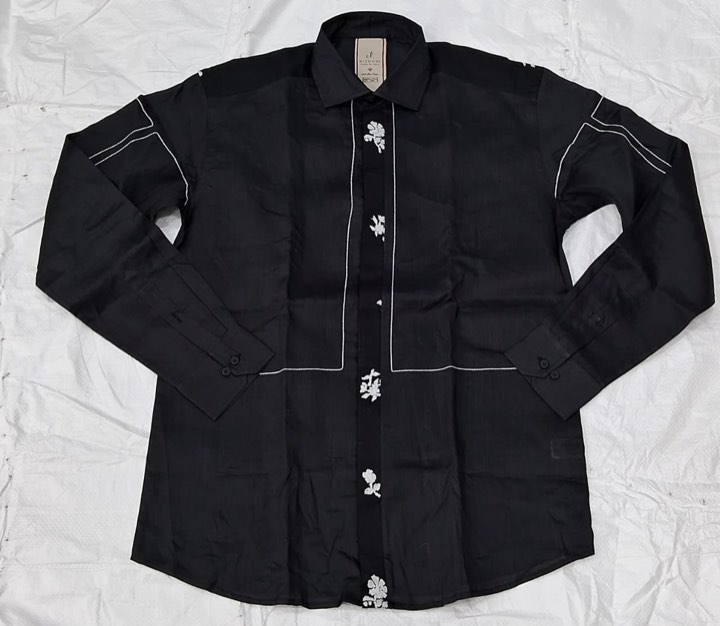
Finishing is everything that happens after the shirt is technically complete: the hem, the inside seams, the trims. Decorative details such as piping or embroidery should feel deliberate — lines that meet cleanly at corners, motifs that sit symmetrically on the placket. Quieter signs matter just as much: a reinforced gusset where the side seam meets the hem, a split back yoke cut on two angles for a better fit across the shoulders, no loose threads anywhere.
Turn it inside out
A well-finished shirt is almost as neat inside as out.
Bench card The sixty-second inspection
01Rub the cloth: smooth, even and free of fuzz.
02Hold a fold to the light: dense and consistent.
03Roll the collar point: firm, supple, no bubbles.
No page can tell you how a shirt feels against the wrist on a humid afternoon. Visit us in Juhu, take a few men's formal shirts in your hands, compare weaves side by side under good light, and try the collar and cuff on yourself. Bring the questions from this page — they are exactly the right ones to ask.
Options Mall
Vile Parle Shopping Centre, Above Sahakari Bhandar, V.M. Road, Juhu, Vile Parle West, Mumbai - 400049.